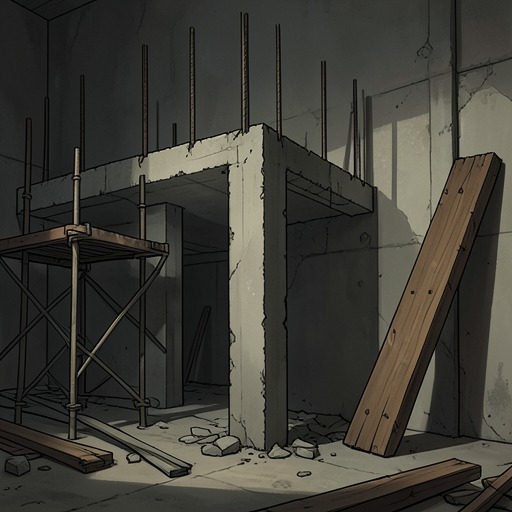
Aza and Daisy discover the jogger’s mouth
Turtles All the Way DownAza Holmes and Daisy Ramirez discover the jogger’s mouth at the unfinished Pogue’s Run tunnel, where a grim underground passage opens onto a moonlit view of Indianapolis and an unfinished water project. Their recognition turns an obscure geographical clue into a possible lead on Russell Pickett’s whereabouts. Yet the discovery remains an inference, not a sighting: the two friends find the place where the clue points, but not the missing man himself.
The Search Reaches the Tunnel’s Edge
The discovery comes as Aza and Daisy make their way through the tunnel. Daisy asks whether the smell is getting worse; Aza agrees that it is not improving, describing the reek as rotting garbage and unflushed toilets. At an offshoot, Daisy says she wants to turn back. Aza continues because she can see a pinprick of gray light ahead and wants to find out what lies at the end. Their movement toward the light is both literal exploration and a decision to stay with an unpleasant, uncertain search when retreat is available.
As they approach the opening, the sounds of the city grow louder and the smell eases. The gray point expands until they reach the tunnel’s open, unfinished end. The water-treatment project was meant to divert a small flow from White River, but instead a trickle falls into the river two stories below. This physical failure matters to the discovery: the site is not a completed public work but an incomplete passage whose intended function and actual condition remain visibly at odds.
A View and a Recognition
At the opening, the city appears startlingly bright despite the late hour. From the tunnel’s edge, Aza sees moss on the river boulders, frothy bubbles at the base of a waterfall, trees bent over the water, power lines, a silver grain mill, and distant neon signs for Speedway and Chase Bank. The view reverses the usual relation between Indianapolis and its flat landscape: a city not known for elevated vistas is suddenly spread out below them, seen from an unexpected place. The beauty does not erase the tunnel’s foulness or unfinished state; the striking panorama and the failed infrastructure occupy the same scene.
Aza hopes that the site will still be accessible years later, imagining a return in ten or twenty years rather than a high-school reunion. Daisy answers with an ironic acknowledgment that keeping Pogue’s Run filthy would preserve the spectacular view, and connects the project’s condition to Russell Pickett’s corruption and incompetence. The exchange brings the landscape back to the investigation: the unfinished tunnel is not just a hidden vantage point but part of the abandoned project associated with Pickett.
Aza then asks where Pogue’s Run begins and where its mouth is. Daisy clarifies that a river’s mouth is where it ends, not where it begins. The correction makes the clue legible to both of them: they are already at the mouth. Daisy recognizes the implication and names their location as “the jogger’s mouth.” The moment is anagnorisis through geography: a phrase that had functioned as a puzzle becomes a specific place, and the surrounding tunnel supplies the physical confirmation that their interpretation has landed somewhere real.
From Discovery to Disclosure
Recognition immediately gives way to unease. Aza feels as though Pickett might be behind them and could push them from the tunnel’s edge into the river. She says she is frightened, but neither she nor Daisy claims to know whether Pickett is actually there. Aza chooses a restrained response: they will turn back toward the party, return to the music, and keep the information quiet apart from telling Davis. She says Davis can decide whether to tell Noah. The plan limits what the discovery authorizes; finding the likely location does not give the two friends certainty about its occupant or make them the decision-makers for the Pickett brothers.
Later, Aza tells Davis that the jogger’s mouth is the mouth of Pogue’s Run, at the site of the company’s unfinished project. When he asks whether she is sure, she answers that she is pretty sure and explains that she and Daisy were there the previous night. Davis asks whether they saw his father. Aza says they did not, but reasons that the connection between the river’s mouth and the jogger’s mouth makes the location plausible. The distinction between seeing and inferring stays explicit: she brings Davis a lead, not proof.
The event’s importance lies in this measured change of knowledge. Before the visit, the jogger’s mouth is a phrase to interpret; afterward, it is anchored to a particular, unfinished tunnel where Russell Pickett may be. The discovery shifts the search from decoding a clue to deciding what to do with a credible but unverified location. Aza’s choice to tell Davis, while leaving Noah’s involvement to his brother and withholding the information from others, carries the clue forward without pretending that uncertainty has been resolved.